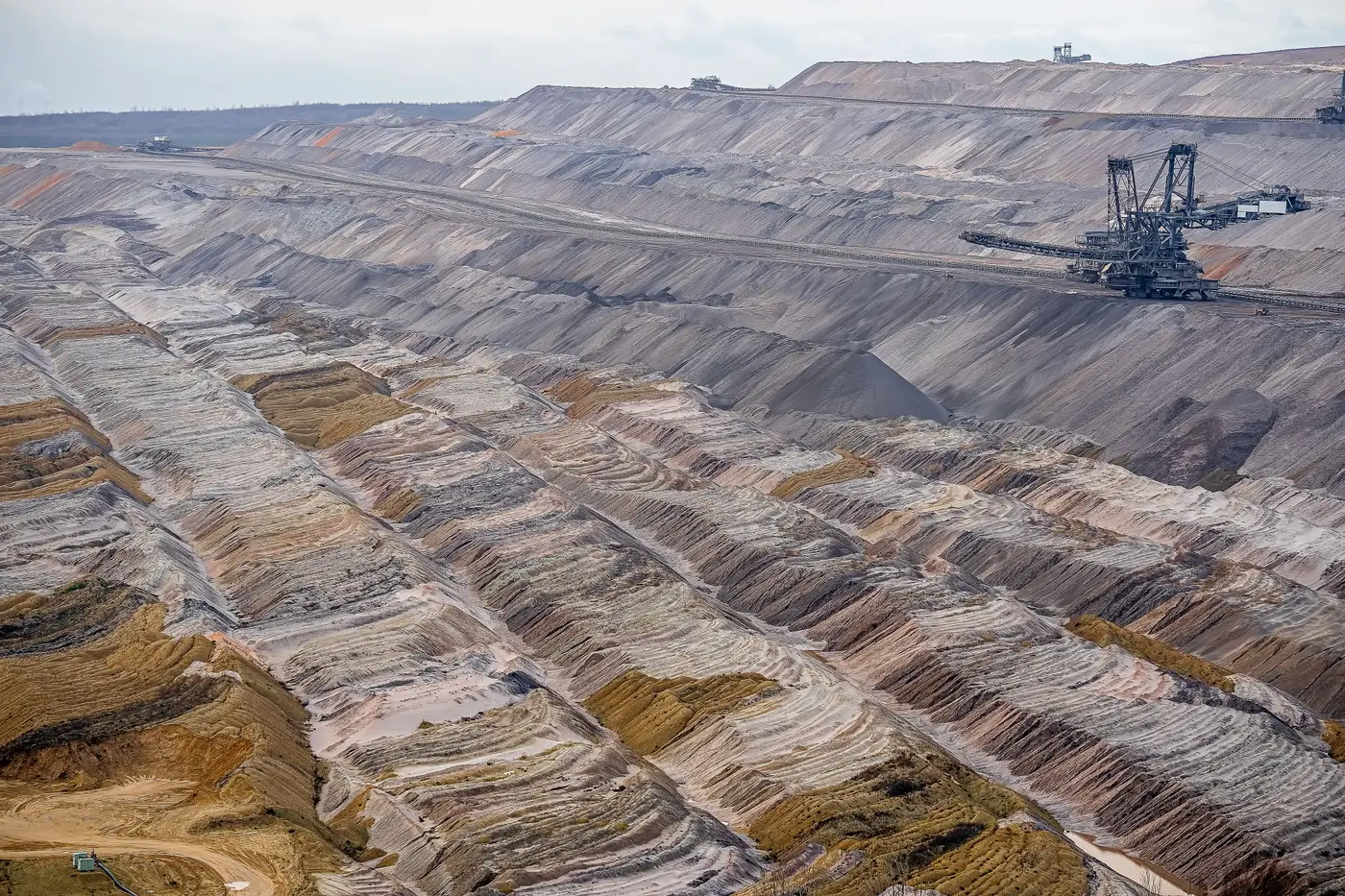
It starts with a photo. Page 14 of the glossy report, a rehabilitated slope, green and terraced, captioned "progressive rehabilitation at [Site], 2025." The kind of image an investor relations team picks because it photographs well: good light, no equipment in frame, a tree in the foreground doing a lot of narrative work.
An analyst on our team pulled the coordinates embedded in the filename, metadata nobody had scrubbed, and ran them back three years. The slope in the photo was an older, already-rehabilitated face from a different pit, half a kilometre from the active tailings facility the report was ostensibly describing. The company hadn't mined that particular slope in three years.
Nobody at the company lied, probably. ESG reporting teams work from an image library assembled over years, pulling whatever shot fits the caption they need that cycle. The photo was real, just not representative, and not current. But "real but not representative" is exactly the gap an engagement call can't close on its own. Management will answer every question about the picture you asked about. The picture you didn't know to ask about sits one tab over in the shared drive, unphotographed, this quarter.
That's the thing about site photography in CSR reports: it's chosen, not sampled. Nobody commissions a photographer to document the ordinary Tuesday condition of a tailings dam or a flare stack running hot. A photo exists because someone decided it told a good story. The absence of a photo tells you nothing, because absence is the default state of every square meter of a site that didn't make the cut.
We've started treating the cover photo less like evidence and more like a hypothesis. A caption that says "no further forest clearing since 2022" is a testable claim, checkable against a stack of multispectral passes rather than taken on faith. If the tailings disclosure says the embankment footprint is stable, check the footprint against the footprint itself, measured independently each quarter. An engineering firm's annual certification letter is backward-looking by design, and it's written by people the company pays.
None of this is an accusation. Most mismatches we've found come down to lag, plain and simple. A report goes to print in March describing conditions from the prior fiscal year, next to a photo taken whenever the comms team last sent someone out, about a site that's kept quietly expanding its clearance since. By the time that annual report photo lands in a fund's ESG file, it can be describing a place that no longer exists in that configuration. The ground moves faster than the publishing calendar.
What's changed is the cost of checking, not the level of suspicion. A quarterly pass over a portfolio company's coordinates used to mean commissioning a one-off tasking order and waiting weeks for someone to interpret it. Now it's closer to a standing check: does the flare count this quarter look like last quarter, has the tailings footprint moved, is there new clearing inside the concession boundary the land-use disclosure didn't mention. The photo on page 14 stops being the only window into the site and becomes one data point among several, which is really all it should ever have been.
We still read the sustainability reports cover to cover. Plenty of the photos hold up fine against the imagery. But we've stopped treating a well-composed rehabilitation shot as a substitute for a look at the actual footprint over time, which is the whole premise behind ESG Screening: turn the disclosure into a claim you can check against the site itself, every quarter, instead of waiting for the next glossy page 14 to show up in your inbox.
Run the screen before the next report lands on your desk.