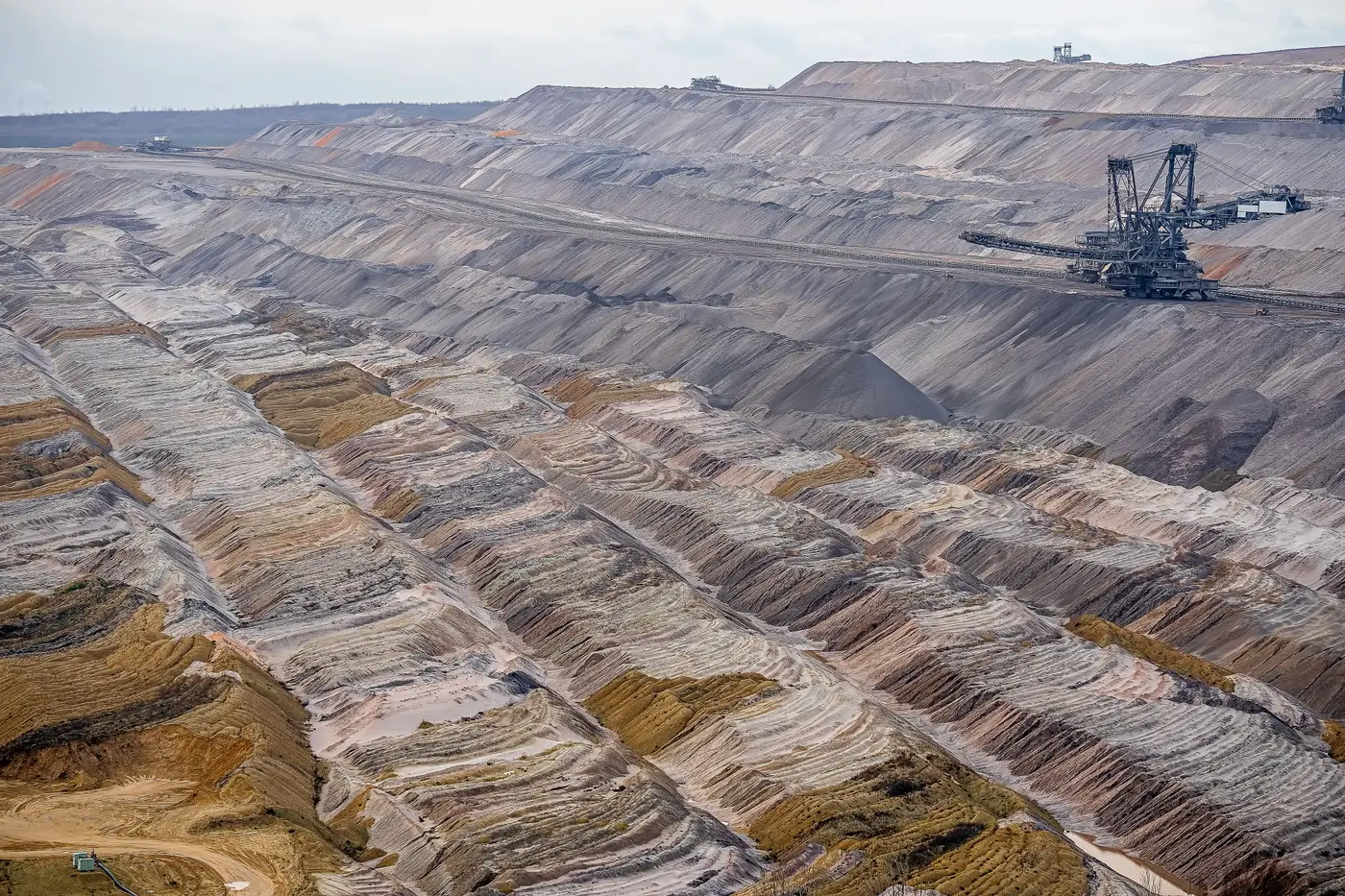
You've got a flag on a site. Maybe it's a tailings footprint that looks bigger than last year's sustainability report describes, a flare that's been burning longer than the "routine maintenance" note in the CDP response, or a clearing pattern near a concession boundary nobody mentioned. The call with IR or the sustainability lead is on the calendar. Now you have to decide what you're actually asking them.
Most of these calls go well when the analyst brings something the company can respond to point by point, a dated comparison instead of a screenshot and a hunch. The company's team will defend their disclosure unless you give them a specific, dated, comparable thing to react to.
What to have in hand before you dial in
Pull together the pieces that let you ask a precise question instead of a vague one:
- A date range, not a single image. "We're seeing change between these two passes" is answerable. "This looks off" is not.
- Coordinates or a named parcel, matched to whatever boundary the company uses in its own reporting, lease block, concession number, facility ID. If your flag and their disclosure are using different site definitions, that's often the actual finding.
- The disclosure language side by side with the observation. Pull the exact sentence from the sustainability report, the CDP submission, or the site-level data they sent your team, and put it next to the dated change. Don't paraphrase their commitment from memory.
- A record of whether this is the first time you've raised it. If this is a repeat flag from last quarter's screen, say so up front. It changes the tone of the conversation from "new concern" to "this still hasn't been resolved."
- A clear sense of what you're asking for. You're asking the company to explain a discrepancy between what they reported and what a satellite pass shows. That's a narrower ask than a compliance finding, and keeping it that narrow is usually the first thing a sharp IR contact will test.
Framing the ask without starting a fight
The companies that respond well are the ones where the analyst opens with the specific comparison, not with a conclusion. Something closer to "our screen shows the tailings footprint expanded roughly between these two dates, and your Q2 disclosure described the facility as stable, can you walk us through what changed" lands very differently than "your disclosure is wrong."
Some flags turn out to have ordinary explanations. A flare can run long because a planned turnaround slipped past the next disclosure cycle. A tailings footprint can grow because a permitted expansion hasn't made it into the sustainability report yet. An encroachment flag can trace back to a smallholder operation on the neighboring parcel, outside what the company is required to report at all. Your job on the call is to get a dated, site-specific answer, not to assume the worst before the company has had a chance to walk you through it. If the answer is thin or they ask for time to check with the site team, note that and set a follow-up date. A pattern of "we'll get back to you" across quarters is itself worth logging for the engagement file.
What goes in the engagement log afterward
Write down what was asked, what was answered, and what's still open, tied to the same coordinates and date range you brought to the call. That record is what turns a one-off awkward conversation into something you can escalate later, whether that's a vote against the sustainability committee chair or a line in the annual stewardship report.
None of this works if the flag itself is a guess. ESG Screening builds the per-holding risk map and change log that gives you the dated before-and-after, down to the site, so you're bringing a specific comparison to the call instead of a screenshot you can't fully stand behind. If your next engagement call is going to hinge on a site-level flag, it's worth seeing the full screen before you dial in.