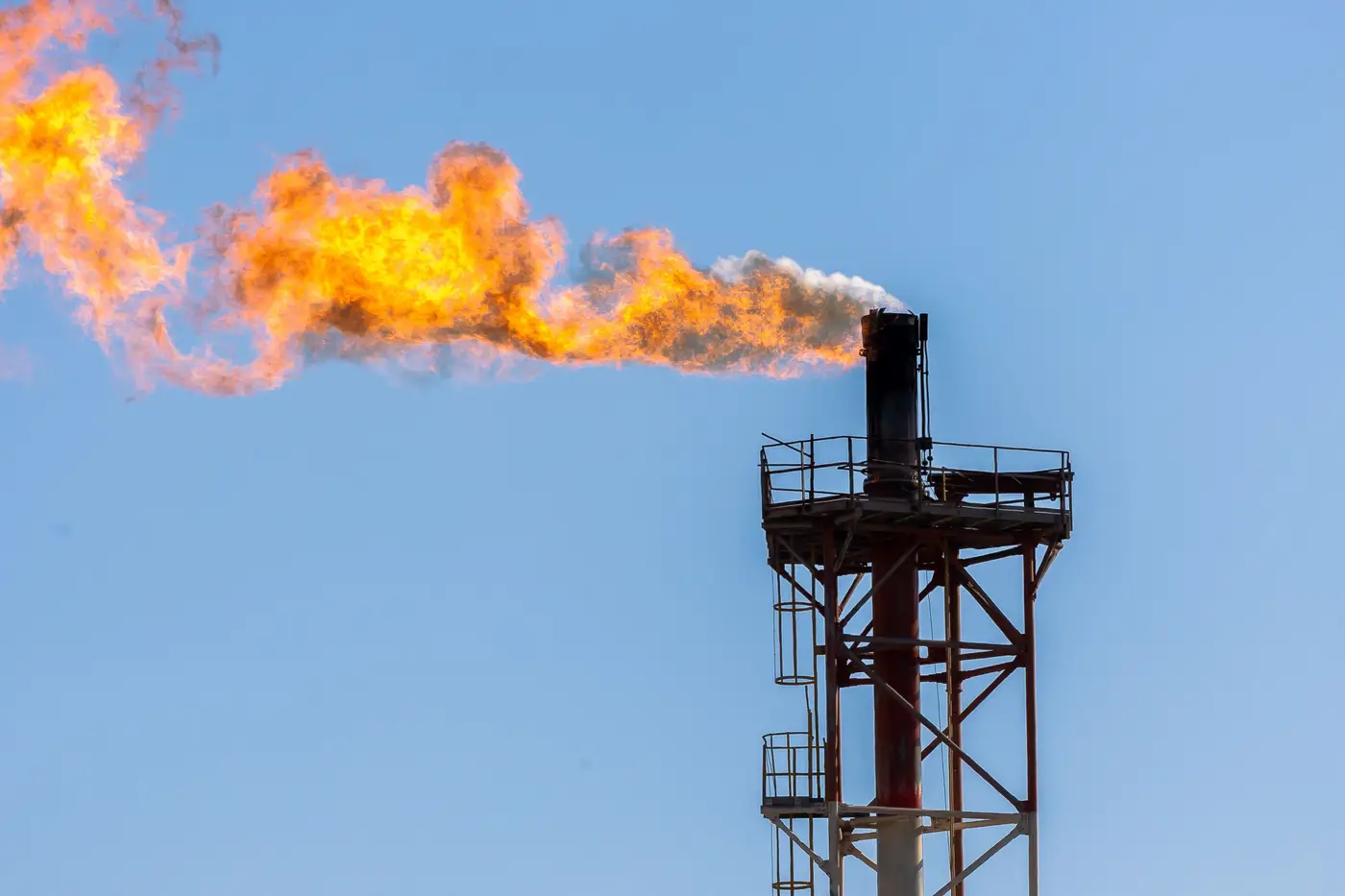
A flag shows up in the quarterly screen: a tailings footprint has grown at a mid-cap miner, or a flare stack that's supposed to be intermittent has been burning steady for two reads running. The analyst who picks it up has maybe ten minutes before the next item in the queue, and no written rule for what happens next. That's the gap an escalation threshold is meant to close, and most stewardship teams don't write one down until after a flag has already been mishandled once.
What a flag is actually telling you
A change-log entry from a medium-resolution multispectral pass isn't a verdict. It's a pointer: something on the ground looks different from the last pass, or different from what the company disclosed in its sustainability report. Deforestation at a forestry or agri-commodity holding, a tailings-dam footprint that's expanded past the permitted boundary, flaring that doesn't match the operator's reduction targets, encroachment into a buffer zone around a protected area. Each of these is a trigger to look closer, not a finding to put in a memo to the investment committee.
The threshold question is really two separate questions people tend to merge. First: is this flag material enough to warrant any action at all, versus logging it and watching the next quarter's pass? Second: if it does warrant action, does that action stop at a request for clarification from IR, or does it go to the stewardship lead for a formal engagement letter?
Where to set the trigger
Most teams that have gotten this right use a small number of concrete gates rather than a judgment call each time.
Magnitude of change. A single quarter's footprint growth at a tailings facility that's within the range of normal operational variance is different from a step change that lines up with a known incident report or a regulator notice. Set a size or percentage threshold per risk type, even a rough one, so the analyst isn't deciding from scratch every time.
Disclosure gap. The flag matters more when it contradicts something the company said publicly. If the ESG report claims zero net deforestation at a concession and the change log shows clearing inside that concession boundary, that's a disclosure-accuracy problem on top of a physical-risk one, and it should escalate faster than a flag with no stated baseline to contradict.
Persistence. One quarter's flare anomaly might be a maintenance event. Two consecutive quarters is a pattern. Build the threshold around repeat occurrence, not just the first sighting, so you're not escalating on noise but you're also not waiting four quarters to notice a trend that was visible after two.
Portfolio weight. A flag at a holding that's 4% of the fund gets a faster clock than the same flag at a 0.1% position. This is the one variable that has nothing to do with the satellite data and everything to do with your own book, so it has to come from the PM side, not the screening vendor.
Building escalation into the existing cadence
The threshold only works if it's attached to something that already happens on a schedule. For a stewardship team that reviews a per-holding risk map and change log each quarter, the escalation rule can live right there as a sort step: flags that clear the gates above get pulled into the engagement queue before the meeting starts. That turns the quarterly screen from a reading exercise into a triage exercise, which is the point of running one in the first place.
Write the thresholds down somewhere the whole team can see them, even in a one-page doc. The value isn't in getting the exact numbers right on the first pass. It's in having a documented reason for every escalation decision, so that when an IC member or an LP asks why a holding wasn't flagged sooner, or why it was flagged at all, there's an answer that doesn't start with "it seemed like a good time."
If you're still deciding what counts as a flag before you can decide when to escalate one, that's worth sorting first. A quarterly risk map and change log across the holding gives you the baseline to set these thresholds against.