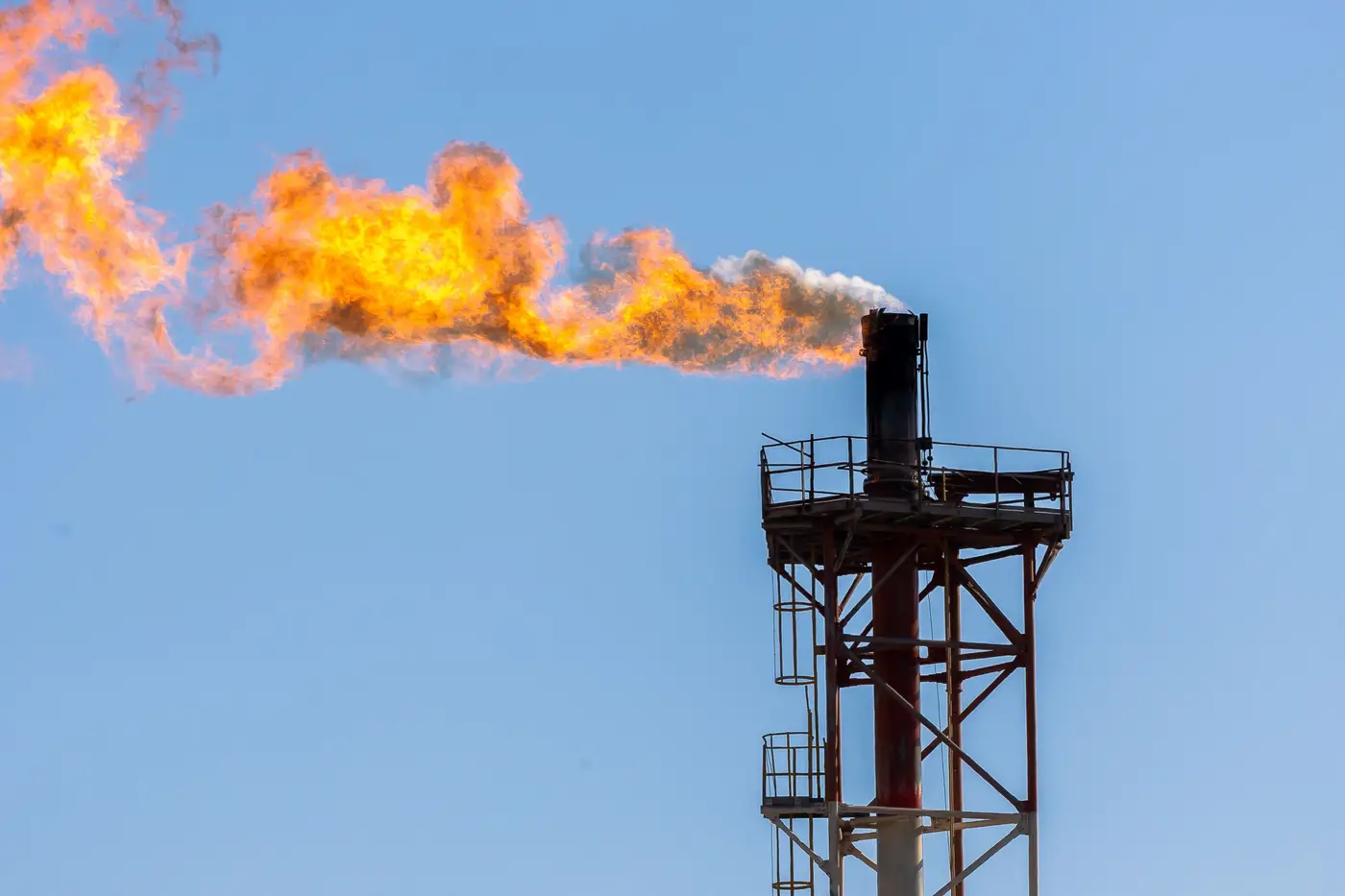
A portfolio company's Scope 1 filing shows flaring volumes down for the year. The flare stack in your last three quarterly images hasn't gone dark once. Neither number is necessarily wrong. They're measuring different things, on different timelines, with different incentives behind them, and that's the whole reason satellite flare detection has become a standard cross-check rather than a replacement for reported methane data.
Why the two numbers rarely match
Company-reported flaring volumes come from engineering estimates: meter readings where metering exists, stoichiometric calculations where it doesn't, rolled up annually and run through whatever emission factor the operator's jurisdiction requires. A lot of judgment sits inside that number before it ever reaches a GHGRP subpart W filing or an OGMP 2.0 submission. Routine flaring, non-routine flaring, and venting often get bucketed differently depending on who's doing the accounting, and "down 12% year over year" can mean the field genuinely flared less, or it can mean a smaller share of events got classified as reportable.
A satellite pass doesn't care about classification. It sees a thermal signature or a visible flame footprint at a given stack, on a given day, and that's it. It has no opinion on whether the gas was routine or non-routine, continuous or intermittent, metered or estimated. So when a flare shows up active in October, January, and April but the annual filing records three short events, the discrepancy isn't proof of misreporting. It's a prompt to ask which definition of "flaring event" the company used, and whether the stack you're looking at is even the one named in the filing.
Site identification is its own common source of mismatch. A permit can list one GPS coordinate while the actual flare operates fifty meters off it, or a facility can run multiple stacks under a single reported site ID. Before treating any gap as a disclosure problem, confirm you're looking at the same physical point the company is reporting against.
Reading a flare count discrepancy before you raise it
A flare count discrepancy raises a question worth running down before it reaches the investment committee. Three things worth checking first:
Are you comparing the same kind of measurement? A quarterly satellite screen flags presence of flaring activity at a site across a reporting period. A company's annual number is a volume estimate for the same period. A site can show up active in every quarterly pass and still have a declining reported volume if the flare events themselves got shorter or smaller.
Does the company disclose at the facility level or the corporate level? Many Scope 1 filings roll flaring up across an entire operating segment. If your satellite layer is flagging one site and the disclosure covers twenty, you need the facility-level breakdown before the gap means anything.
What's the cadence mismatch? A company reports once a year. A quarterly screen gives you four looks. If a stack went dark for two quarters and lit back up for the other two, your screen will show that seasonal pattern in a way the annual filing simply can't.
The satellite view is a second, independent read on the same underlying claim. It either lines up with the disclosure, or it gives you a specific, dated, site-level question to put to the company: this stack was active on these dates, your filing reports this volume for the year, walk us through how those reconcile.
What this looks like at portfolio scale
For a single holding, you can probably track this by hand: pull the imagery, check the dates, compare against the 10-K or sustainability report footnote. Across forty or sixty holdings with flaring exposure, that stops being realistic as a quarterly exercise, which is the gap ESG Screening is built to close with a quarterly per-holding risk map and change log flagging flaring, encroachment, and footprint change at each site, so the discrepancy question gets asked with a date-stamped image in hand rather than a hunch.
If gas flaring is sitting on your watchlist for the next engagement cycle, that's worth a look before the next round of disclosures lands.