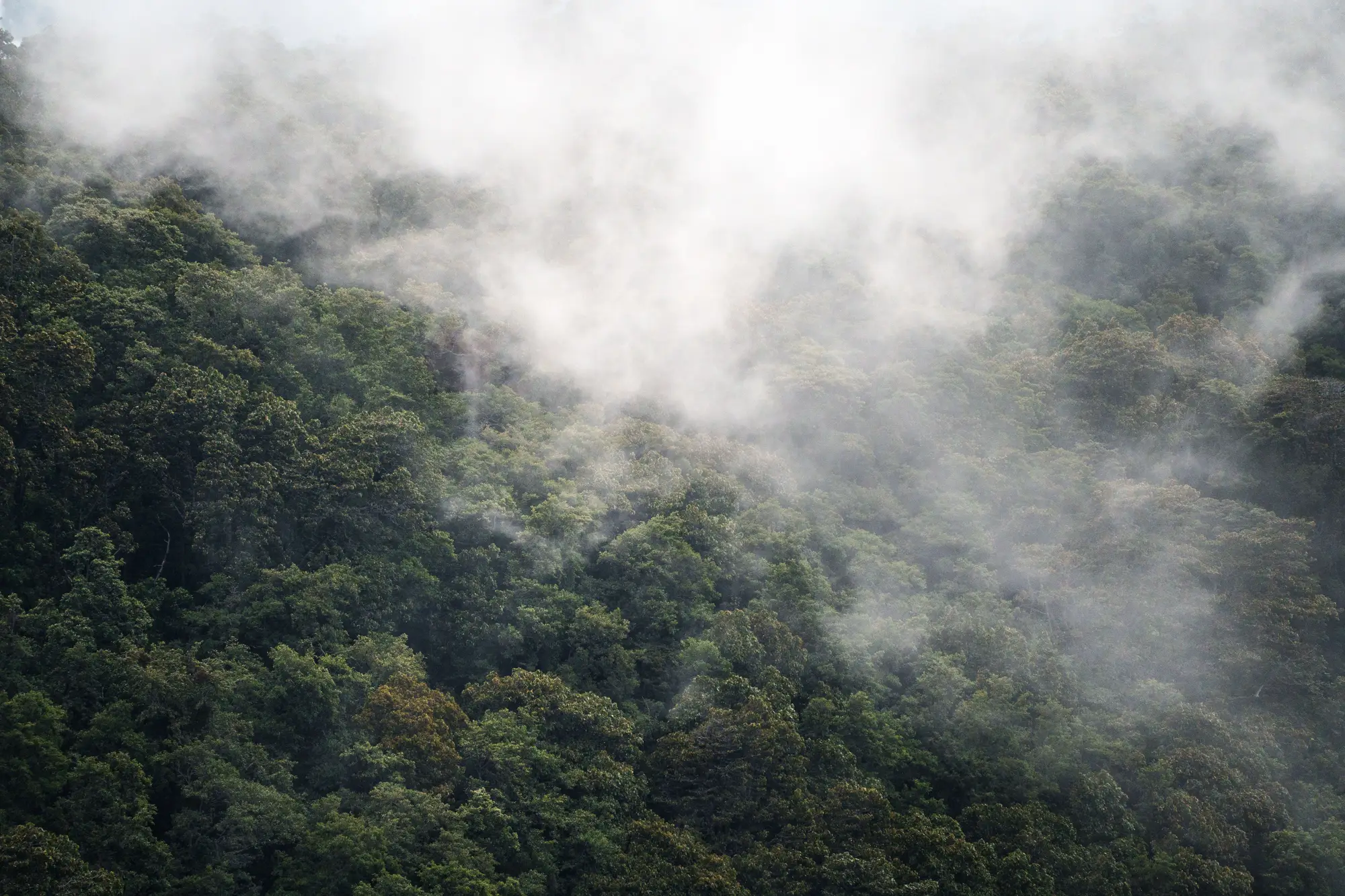
TNFD stands for the Taskforce on Nature-related Financial Disclosures. It published its final recommendations in September 2023, built loosely on the TCFD climate framework but organized around nature instead: the dependencies, impacts, risks, and opportunities tied to a company's relationship with the ecosystems it operates in and draws from.
If your coverage universe includes natural resources, agriculture, utilities, or extractives names, you've probably already had a portfolio company ask whether it should start reporting against TNFD, or seen one mention it in passing in a sustainability report. Adoption is voluntary so far, but regulators in several jurisdictions are watching it, and some large asset owners are now asking their managers to show nature risk by holding rather than by sector average.
The LEAP approach, and where it runs into trouble
TNFD's recommended process is called LEAP: Locate, Evaluate, Assess, Prepare. The Locate step asks a company to identify where its operations and value chain sit relative to sensitive or protected areas. Evaluate asks what dependencies and impacts exist at those locations, covering things like water use, land conversion, and pressure on species.
This is where self-reported disclosure and what's actually happening on the ground start to drift apart. A mining company's report says a tailings facility is operating within its permitted footprint. A timber or palm concession reports no expansion past its 2019 boundary. An upstream gas operator reports flaring reductions year over year. None of these claims is necessarily false. None of them is checkable from the report itself either, and a LEAP-aligned disclosure is only as good as the location data sitting underneath it.
For a stewardship team holding dozens or hundreds of names with physical sites, chasing down even a handful of these claims by request letter or site visit isn't realistic on a quarterly engagement cycle.
What satellite site evidence actually adds
Medium-resolution multispectral imagery, the kind flown on a regular public repeat cycle, won't calculate a biodiversity dependency score or run a LEAP assessment for you. What it can do is give you an independent read on the physical footprint questions sitting underneath several TNFD disclosure items: has forest cover around a concession boundary changed since the last reporting period, has a tailings dam's footprint grown, is a flare visible at a site that reported flaring was eliminated, has infrastructure crept into a buffer zone the company said it respected.
That's a narrower job than full nature-risk assessment, and the difference is worth being precise about. Site evidence doesn't tell you what a dependency means for cost of capital. It tells you whether the ground-level facts a company reported still hold up, on whatever cadence you set rather than the one dictated by the next annual report.
That distinction pays off directly in an engagement letter. Open with "Your flaring disclosure says X, our imagery from last quarter shows a flare at site Y," and you have a specific, defensible question grounded in something you can point to. Open with "Your TNFD dependency score seems low," and the company has nothing concrete to respond to.
Using it without overclaiming it
Satellite site evidence works best as a screening layer. A flagged change gives you grounds to put a direct question to the company. Write the company's answer into your stewardship note; the image itself is the trigger for that question, nothing more. It also won't catch everything: cloud cover, resolution limits, and the gap between passes mean some changes show up late or not at all.
Where it earns its place is closing the gap between what gets written in a disclosure and what a holding's site looks like from above, checked on a schedule you control instead of one you wait on. ESG Screening runs that layer as a quarterly per-holding map and change log flagging deforestation, tailings-dam footprint change, flaring, and encroachment, so your TNFD-related questions start from something you've already checked rather than something you're taking on faith.
If a holding's next disclosure is due before you've had a chance to check the ground truth, that's worth a conversation.